Wednesday, September 15, 2010

ARPANET to Skynet


After watching half of, “The Internet Behind the Web,” it made me ponder how could people get so engaged in punch cards and sitting at computers that are as big as my house with no screen. I would not be able to develop computers or the Internet like Vinton Cerf. It seems that is was a mundane job that was filled with tons of rejection and failure with their technology.

Thanks to these Internet pioneers, now I use the Internet in my every daily life. Sometimes I wonder what would happen if the Internet was never invented? Would NASA, our government, entertainment, and economy in the early 90’s boomed? This rapid pace of information from our computers and Internet has provided an ample amount of information that has change our way of life. Also, how far can we go with this technology and is our future going to look like an Arnold Schwarzenegger movie? Lastly, after watching the evolution of the internet I think it is funny how technology started out so simple but tedious then became very technical. Now in 2010 we have done a 360 and we are back to simple App technology that was first start by email.

last week's "History of the Internet" video


I like to keep things funny. What mean, "funny." If ever I need a really great laugh, I go to Cracked.com or look up lolcats or demotivational posters.

But where can I find these epic, user-created comedic masterpieces?!

Well, my good friends, you've come to the right place: the internet!

Our Online Media Design class viewed a segment of video on The History of the Internet. While the video itself was a little dated, the information remains relevant and provides a glimpse into the process of making probably the most used communication platform on Earth.

The video covered lots of ground: from the space race to the phone companies' epic fail when they decided to skip out on having a stake in the production of the internet.

To have been a part of the handfuls of folks that made the web a reality must be, well, super neat-0. So many hurdles, problems, complications, non-believers, and so little money. But they did it anyway.

I have seen the video once before and the same notion sticks out in my mind: They did this for free! Ray Tomlinson, the inventor of The Killer App! - email - said he worked on figuring out how to deliver electronic messages because he though it would be cool. Wait, wha? Fame and fortune were not the motivators of Mr. Tomlinson back in the '70s. Instead, what made him jump through coded hoops was the idea of innovation. That, to me, is way too rad.

These guys had no idea what was in their hands and now the world owes them infinite high-fives.

History of the Internet

This viewing of the video was, like a few others in the class, my second time to watch the movie. Although I do have to say that I didn't retain much from the first viewing of the video. But that is beside the point. Speaking of points, there are a few of them that I saw as pretty interesting while watching the video again.

When you log onto the internet, the only authority figure that you know of within the web are those who host websites and the internet service providers who allow you the access to the web. Yet, the truth is that no one really controls the internet. Just think about that for a moment. Have you ever asked yourself the question of, "Does someone control the internet?" Kinda interesting thought if you ask me.

Another point of interest to me is the fact that back in the 40s and 50s, computers got the same respect as UFOs and laser guns. And when I say they got respect, I mean that they were horribly over-exaggerated but the fact is that they were depicted in movies back then is interesting if you love foreshadowing.

Something that I also found interesting was the fact that the main invention of the internet had basically been left up to grad students. That kinda tells me that the brains of the 'Net really didn't mind if it failed or not. However, an interesting point was made...Had ARPAnet failed, would we know the internet as it is today? Or would we be without it. We will never know....

Simple Visions Turn into Revolutionary Possibilities


This is my second time watching the History of the Internet and I am still amazed at the way the inventors of e-mail and ethernet and the like talked so casually about their drive and fascination to create some of the most widely used applications and products for the Web. It surprised me the first time and it still gets me now. I thought for sure that both Ray Tomlinson and Robert Metcalfe would have had more of a desire to impact the world and earn millions of dollars, but Ray Tomlinson created e-mail to simply make it easier for him and his company to communicate around the office. And that's how he spoke about it in the interview. So casual, like it was no big deal at the time. And at the time, it wasn't. But, he had no idea what he created in the sense of how many people would be affected. That's just amazing. What an awesome thing to have one simple vision turn into something completely revolutionary for the whole world to potentially take part in.

I think it's really neat to see interviews of those guys. The Web has changed immensely from 10 years ago, but e-mail has impacted the world on many levels and is still continuing to do so today. I would hope we would still be able to get interviews from those guys even today. I wonder if they would say anything differently from the video 10 years ago. My guess is no.

Changing Everything

This is the second time I've seen the History of the Internet video now, but hearing the stories about the development of technology since then will never cease to amaze me. I think the theme that sticks out the most when looking at the development of the web is the speed with which these advances get used and integrated into our lives.

In the video, this was exemplified with email, the first 'killer app'. No one was asking for an electronic mailing system to be created, but Ray Tomlinson played around with Internet capabilities and came up with it on his own time. Since then, it has become much more commonly used than the traditional mail system. In fact, the video mentions that more email than post office letters are delivered...and the video is old. I think older generations might lean towards traditional mailing systems more, but almost everyone I know (including my parents) has adopted email as their mailing system of choice.

This theme can also be seen with the creation of other 'apps', like Google, Facebook, and Twitter. None of the creators expected their site to become as widely known and used as they have become. Almost instantaneously, each of these sites grew from a fledgling idea (concocted in a dorm room in some cases) to a massive, global phenomenon that has undeniably changed aspects of our culture.

Another small thing I thought was interesting from the movie was that phone companies didn't want to get involved in computer networks because they didn't think they would be useful or important for mainstream use. WRONG. I bet they are still kicking themselves about that one. But if you think about it, we're probably lucky that major phone companies didn't get involved, otherwise the internet we have today would likely be much less 'free'.

Cause/Effect

The "History of the Internet" video we watched in class was interesting to me for a number of reasons, most of which my classmates have already talked about.  The one bit that stuck out to me the most, though, was the part about ARPANET.

At one point, I believe someone in the video stated that the basic idea behind ARPANET was to create a communications network that would survive a bombing attack, as traditional telephone communication would be easily disrupted, leaving the US unable to retaliate.

With most of the early work taking place in the 1960's during the Cold War, obviously the government was concerned about a bombing attack instigated by the Soviets and their allies--a nuclear attack.

The MAD doctrine (Mutually Assured Destruction), as you know, is the idea that no country would instigate a nuclear attack because their target could and should be expected to retaliate in kind, leading to both parties' total destruction.  It's the principle that, some would say, kept the US and the Soviet Union from engaging in all-out nuclear war.

So basically, ARPANET was created to put the "assured" in "mutually assured destruction."  After all, if our communications network was destroyed as the result of an attack, how could we hope to retaliate?

If you wanted to break things down simply, you could say that the internet is a by-product of the Cold War.

Or you could say that I've probably just been reading too much Cold War stuff lately.  Still, it's kind of funny that something created for a task as grim as carrying news of a nuclear attack is now used to tell strangers what you thought of the latest episode of Jersey Shore or to watch videos of people buttering their bathroom floor so their roommate trips when they get out of the shower.  As seen here: http://www.youtube.com/watch?v=zx7CRlYiR2A

Tuesday, September 14, 2010

The First Killer App


I only wish I could have invented the first killer app, aka email. What a genius idea and I give props to Ray Tomlinson for having the smarts and creativity in 1971 to develop such a powerful tool that has revolutionized how people, businesses and public entities interact with each other.

After watching a video on the history of the internet in my graduate online media design class, I was shocked to learn Ray wasn't tasked by his employer to develop the email machine, he instead did this totally on his own free time, like a pet project.

I did some more research on Ray and came across a pretty cool and informative Q&A with him on DataMation that posted in 2002 called "A Conversation with the Inventor of Email".

One of the questions touched on when Ray realized how big email was going to be. His answer is not big at first since there were not many computers at that time. He also stated that he never documented the creation of the program, but around 1993 when someone started to ask where email started he knew he had created the program.


Another question touched on Ray's thoughts about Spam. His answer is that he gets irked when he gets it and hopes to see a solution come along to address it. Surprisingly, he is not spending time trying to solve this problem and really hasn't touched the email program after the late 70's. Maybe if Ray still was involved we'd have another genius solution!

Most interesting to me is the question that touched on if Ray has been bothered that his name is not a household name despite the major contributions he has made. His answer is no...how modest of him. Ray states that he is recognized in the geek world and is flattered when non-techy people recognize his name, but getting recognition is not the center of his life. Ray is actually most known for the workstation he built around 1980. According to Ray this was the biggest single thing he's ever done.

I am not sure if I can even come close to Ray's accomplishments, but I am sure thankful he's created such a killer app that keeps my life moving along. Thanks Ray.

The history of the internet


The internet today is our life. Plain and simple.....to think that even 50 years ago this concept was new and very naive is almost unreal. Now there are millions of people online daily doing a variety of different things.

Recently in my online media design class with @cindyroyal we watched the "history of the internet" produced by the History channel which describes the internet as "no other invention that has grown so fast and touched so many lives" and also as "in an instant you have access to things everywhere" In the beginning of it all, ARPA created something called the ARPANET.

Vinton Cerf who now works for Google is recognized as one of the "fathers of the internet" describes the WWW as the Telecom infrastructure of the 21st century. I would say he was pretty accurate. The video provides insight from the brilliant individuals involved in the creation and advancement of the internet and the way the networks were established. Interestingly enough, some of these remarkable individuals were graduate students at the time of their discoveries and decisions that are important today. It gives us grad students some inspiration! :)

Just to name a few of these pretty neat and creative individuals:

Dr. Leonard Kleinwreck - professor at UCLA also known as the "father of the internet" he developed the theory of the packet of networks. His host computer at UCLA became the first node of the internet in September 1969. And....he was a graduate student at the time:)

Ray Tomlinson -BBN - 1971 wrote a program to enable electronic mail to be sent over the ARPANET. He sent the first true email over the ARPANET, Tomlinson is the inventer of email. He also developed the @host convention. He my friends.....developed "the killer app" What in the world would we do without email? This is an effective and convenient way of communicating to people no matter where they are.

Robert Metcalfe- created a wire-based system using protocols for Local Area Networks (LANS) which becomes Ethernet.

It is intriguing to think about these individuals who created and developed technologies that are SO important and integrated so heavily in our lives.


A history of the internet for visual learners

In class we watched a video on the History of the Internet. While it provided a great background on the the ideas and innovators behind the internet, I had difficulty conceptualizing the progression from ARPAnet to the web we know today. I did some research and found this great video on topic that is visually stimulating and easy to understand. The video was made entirely from in PICOL, a pictorial communication language which aims to find a common language for online communication. I found this visual representation of the Internet's evolution very effective. Hope you enjoy!

History of the Internet from Melih Bilgil on Vimeo.

Monday, September 13, 2010

The History of the Internet

Today we can search for just about anything and within hundredths of a second we can find an answer. It's amazing. I never really knew a time of doing research in an actual library. I can go to a library's web site or just "Google" something if I really want to know about it.

The Internet is a crazy thing. While very new, it actually goes back farther that what people think. But where does the Internet come from?

Interestingly enough, the Internet’s origins began in the 1950’s, and computers were originally seen as sci-fi props that were involved with aliens. It was entertaining watching footage from old movies and how hi-tech they portrayed computers.

The original concept for the Internet that is still in use today is, “No one switch should control the network, but everyone controls it.”

There is no one person that controls all the information provided to us by the Internet. We all have a say in what's posted on those websites. One perfect example is Wikipedia. While not very credible some of the time, since anyone can update the information to say whatever they want, it is an online super encyclopedia with information on just about anything. From a specific band, to diseases, you can search for just about anything.

Originally, the first type of connection was four giant computers interconnected with smaller Interface Message Processors, IMPs. Dr. Paul Baran helped to develop a way for this connection to get a message to its destination, even if it is somehow disrupted. They called this time sharing.

There was a lot of skepticism and many wouldn't help fund this project, but thanks to BBN's courage, it began, ultimately creating what we now call the Internet.

The first draft of a form of the Internet was in 1969, like I was talking about earlier with the four giant computers in different places. It was referred to as "archanet." By 1971, after there was proof this crazy experiment actually worked, there were 18 networks. The rest is history.

Today, with our high-tech smart phones, we have apps that can plan our weddings, plan diets and workouts, give us movie times, and help us locate local businesses. Our phones can do just about anything these days. But what was the original killer app? E-mail.

I have never really known much of a time before the Internet, and could not imagine a life without it.

The Accidental Applicabilities

In watching the documentary on the History of the Web, I was struck by how many of the applications that are now global - and which we use on a daily basis - were developed to address some single organization's specific internal needs. They often seem to have had much more limited scope in their applications, and may not have been envisioned to have much more than the limited use for which they were originally designed. Innovation in general, it seems, tends to follow this pattern.


E-mail, for example, evolved from the specific way electronic notes were left between users at a single computer mainframe computer at MIT in the 1960s; in 1971, Ray Tomlinson sent the first true e-mail via the ARPANet; from there, e-mail applications began popping up in LANs, and eventually migrated to the World Wide Web as a means of efficient, effective, trackable communication. In specifically addressing the need for "time-sharing" within large, institutional mainframe computers, J.C.R. Licklider laid the theoretical groundwork (1960) for a type of Internet where information and applications would be shared between computers via user-friendly interfaces (lowering costs and increasing productivity while exponentially expanding the knowledge base).


Technological innovation, it seems, generally tends to work this way: Each innovation is designed to address a very specific issue, but - as it does so - others look at the innovation and find additional (sometimes unrelated) needs it can address, as well. The Edison Phonograph, for example, came to be most famous for its ability to provide musical entertainment. Billions of dollars - and, indeed, entire new entertainment industries - came into being as a result of this expanded application. The original intent of the phonograph when it was developed by Edison, however, was only to provide a means for recording dictation for business applications, and he allegedly initially resisted the phonograph being used for frivolous entertainment purposes. Likewise, the radio was designed to transmit news and information (particularly in military applications), but soon became more profitable as a medium of mass entertainment.


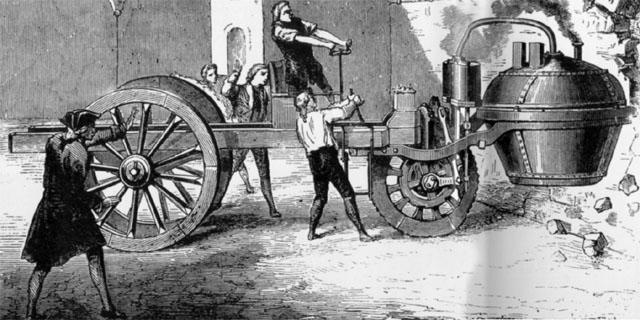
The specific, original intent of the technological innovation leading to motion pictures was not to entertain, but to settle a wager as two whether or not all of a galloping horse's legs left the ground at the same time. (The famous 1878 "moving picture" is now known as "Sallie Gardner at a Gallop.") Automobiles (that is, vehicles that move under their own power) were developed from an original, operational 1769 military vehicle designed by N.J. Cugnot, specifically intended to tow canons around the city of Paris.


Okay. Enough of the history lesson. Returning to the topic of discussion: What struck me most as I rewatched the History of the Web was that so many of the innovations that make up our daily e-nteractions (to coin a word) did not necessarily start out as what we know them as today, but were much more limited in their scope and application. Some even had different limited intended uses, but became adapted for broader applications that changed not only the organizations for which they were developed, but changed the world at large, too. (Note: Without Net Neutrality, this would not have been possible.)


So, maybe the knife was made specifically to get peanut butter out of the jar, but I'll bet you can also use it for jelly. When you add bread (from yet another source!), the result is a truly great sandwich.

Friday, September 10, 2010

Net neutrality and the history of the Internet

During the film we watched in class about the history of the Internet, someone (I can't remember who and neglected to write it down) made the observation that many of the most important and influential things in life are not regulated or controlled in any way. This got me thinking about net neutrality, which is "the principle that Internet users should be able to access any web content they want, post their own content, and use any applications they choose, without restrictions or limitations imposed by their Internet service providers." (CommonCause.org)

The history of the Internet, obviously, is still unfolding. Proponents of net neutrality believe that if large telecommunications and cable companies are allowed to create tiered pricing for content providers, it would essentially eliminate competition and endanger current freedoms. This seems like a no-brainer to me. We already live in a world where basically five huge media conglomerates control the majority of what we see on TV, hear on the radio and read in print. The Internet may be the last true frontier of free speech and should be fiercely guarded.

Corporations act according to their own interests. In the video we watched, the phone companies were not interested in supporting the people developing the Internet because they didn't think it would work and that people wouldn't want it. Clearly, they were wrong about that. They were also already invested in other communication technology. If history has taught us anything, it doesn't appear that we should leave decisions regarding the Internet to corporations.

It can be confusing and a little overwhelming, so read on if you care to:

You can get a short summary of what we watched on the History Channel's website, History.com.

HTC Incredible

htc incredible - Google Search I am writing this only because I can. and I am doing so from my phone! Awesome!
Published with Blogger-droid v1.5.9

Thursday, September 9, 2010

Apple be Apple


What I love about Apple is that they are constantly changing, constantly updating, constantly creating. While some of the redesigns are to some peoples' dismay, many of the redesigns are only setting the stage for technological creations to become the smartest, most creative, most innovative designs and functions to ever have graced this planet. And that is really cool to think about. Yeah, people might not like the new iTunes layout featuring Ping, but it certainly is new and different. And who knows, maybe it will set the stage for something even better in the future. That's what I like to keep in mind. Facebook changes every 2 minutes with a new layout, a new function, but it may be the one layout or function that sends the most earth-shattering innovation into orbit within the next rounds of changes. Who knows.
I really like the new capabilities on the iPods and Apple TVs. Really cool stuff.

Wednesday, September 8, 2010

Apple is at it again!


Just when you think that you are up- to-date with the latest technology Apple comes out with something new that is so awesome and makes so much sense that you can't believe you ever lived without it- that is if you can afford it!

I have to admit I am behind with technology. I have never had an ipod and when I finally get an ipod touch, for $150 at the time, they come out with the ipod nano which is better than the ipod touch and bump the price of the touch down. Same with the phone, I finally get an iphone and then there's is the iphone 4! When is it going to end? When everything I own is an apple product? Probably because they are the best. It's just like new media, a cult. Once you get your hands on one awesome apple product they've got you for life.

That being said, I think the new apple TV is the best one of the new products. I like the idea of being able to rent movies and instantly watch them on you TV. It' s like netflix, but better. And the price of only $99 make it affordable and worth purchasing. The old price of $249 is much to high for me.

Apple is moving into new territory...

A lot of you guys have gone through the different products/services announced last week by Apple, so I wanted to focus specifically on Ping. Ping has the potential to be a major game-changer...or it could end up being another semi-useful tool that never caught on (like the iTunes 'Genius').

First of all, this is Apple's first foray into the social media world. Ping lets users 'follow' each other and the artists that they like, and rate/review/recommend music to one another. The day it was released I signed up and started playing around on it, and I have some mixed feelings about it. Like most Apple products, it is extremely easy to use, and the layout is attractive. However, the 'recommended artists' it listed for me to follow were WAY off. It turns out that not many artists or bands have joined yet, which seems a little silly to me. I think it would have been smarter for Apple to recruit as many artists as possible to create profiles before Ping went public, that way the flood of new users would actually be able to follow the people they are interested in instead of waiting around to see if their favorite artists join Ping. Also, when you purchase a song from iTunes, it automatically posts that you bought it on your Ping profile. While I don't mind this, my roommate got a little embarrassed when her profile said she had just purchased 'Toot it and Boot it.' Whoops. But, like Facebook, there are ways to remove information from your profile that you don't want others to see.

Also, I don't know how much of a 'social' network it really is...there's not much interaction users can have with one another. Maybe that will change as more people start using it, but we'll have to wait and see. For the most part, I'm extremely excited about Ping, and I've been trying to convince my friends to start using it so we can figure out how to use it best. I've never had a MySpace account or spent much time using MySpace for music, but this seems like a great, updated alternative for bands and fans alike.

Apple's new line of technology

When Apple came out on September 1, 2010 with their new line of Apple products, for the most part it was nothing new. Just a few new upgrades to some older technology. No big deal. What I did find as a big deal was the idea of Ping. I believe someone else posted before me about Ping being the death blow to MySpace. To whomever it was, you are absolutely correct. There are people that I know who only keep MySpace around to interact with various bands and through those people, I am able to learn about new bands, old bands releasing new stuff, band breakups, etc. Now with Ping on my iTunes, I don't necessarily have to explain to anyone about any bands that I like. I just favorite a few songs, and boom! just like the "Like" application on Facebook, my friends can see what I like and who I like in the music world. And if that isn't cool enough, as of this publication date, Ping has gone over 1 million users already. Pretty cool. I just recently upgraded my iTunes to 10 and as soon as this blog is finished, I think I will check it out.

The next big idea from Apple is AppleTV. $4.99 for first run movies and 99 cents for HD TV shows that you can play on that brand new 56" 1080i LCD TV. While I like where Apple has their heads, I just cannot get on board with this. Maybe it is just the whole price issue with me, or maybe it is because my memory of movies and TV shows is so great that I can remember key points of those shows without having to watch them over and over again. And my memory is free.

I am fairly jealous of the new iPod Touch and the Retina display technology. However, I also view the iPod Touch as the "poor man's iPhone". You get all the availabilities of the iPhone except for the ability to call. As I said before, basically they just took the iPod Touch and made it into the "poor man's iPhone4" just like they made the earlier iPod Touch to resemble the iPhone 3G and 3GS models.

Probably the biggest headscratcher came with the new iPod Nano and it's full touch screen. I thought they were doing away with the Nano a few years ago? Yet, now it is back with a vengeance and touch screen at that. My original thought and still is my thought on the Nano is, "This product is for girls due to their smaller hands."

Tuesday, September 7, 2010

We are in the future


While I am very disappointed at the lack of flying cars, we are most definitely in the future. It's not quite like the Jetsons interpretation, but pretty close. We have robots to clean our floors, refrigerators that can talk to us and give us recipes and ingredients, while I've only seen them at the airport, we have conveyer belts to transport us, even if just 100 feet, and we now have 3-D TVs. It's ridiculous. Now Steve Jobs is taking everything we do in life to another level...again.

Originally, he innovated the way we listen to music, now he's innovating the way we do everything in life from how we listen and share music to how we watch TV.

New innovations:

New iPod Touch
It is even more like the iPhone without the phone feature. It even has FaceTime video calling and HD video recording capabilities, among other awesome improvements. Who ever thought their walkman could do so much?? This is basically the iPhone for those of us brand-loyal Verizon customers who still wanna have all the fun you AT&T customers are having while we wait out for the day when Verizon to carry the iPhone that seems will never (and probably won't ever) happen. It also always seems like once I finally get something high-tech, the come out with a bigger and better one... I just got an iPod touch for graduation last May.

Reinvention of the iPod Nano with Multi-Touch
This thing is ridiculously small and somehow they expect people to be able to use them. Unless they're supposed to be used by children, I really can't imagine a person able to use this successfully. Maybe like any new product, it will take a little bit to get used to, but we'll see. I don't have much to say about it. I really need to just see it in person, I guess.

New iPod Shuffle
There's not much to say here either since it is just a newer model of the last one. I loved my shuffle when I had one because it was perfect to work out with since it's so light, but I just got an arm band for my iPod touch and the problem was solved. New things are always fun and shiny, though.

iTunes 10 with Ping
Another amazing innovation Mr. Jobs had up his sleeve. I mean, it's been entirely too long since iTunes was updated last ;) If we didn't have enough means to know what everyone says and does, now we need to know what music they listen to. I do think this is pretty awesome, though. I'll download a whole bunch of songs and then don't for a long time and then don't know what to download because I'm sheltered and don't know about good music other than what I hear on the radio a zillion times a day, so I would most definitely benefit from this. I never know what to search for, and while Genius makes it a little easier, now I know that I will be able to search through my friends' music to see what they're listening to that I'm not with Ping. It's pretty exciting.

Finally, and certainly not the least important:
New Apple TV
One word. Awesome. As if we didn't need something else to make our lives super easy. Now we can do everything from our couch. With a smaller design and smaller price tag, Apple offers a newer, better way to stream video to your TV. It's an amazing new way to experience entertainment in your home with streaming from Netflix, YouTube, and Flikr. The nice price and size make it much more attainable to the masses as well, so more people will buy it, and Steve can make more money. While this is freaking awesome, I have a Nintendo Wii to stream my Netflix, an XBOX, DVD player, along with four other outdated, while still nostalgic and working, gaming systems, so at this point in my life, I don't need another device to put in my entertainment system. No matter how small.

After all this, along with tons of other high-tech improvements not listed here and not designed by Apple, we are in the future. We can see people while we talk on the phone with them, we can see people on different continents, we can stream internet videos and pictures to our TV, we can listen to unlimited music anywhere, at any time, as well as an array of other things my mom couldn't do when she was my age. I'm loving it.

Apple Does it Again...& Again & Again & Again.

On September 1, 2010, Apple announced some major innovations and upgrades. Apple has done an extraordinary job at creating an "aura" about its products. These products are not just objects. They are not just tools. They are not just toys. They are a lifestyle. Apple revolutionized the world as we know it. Apple is by far my favorite brand/company/riduculously awesome entity that took over the world/whatever you want to call it. People that know me know that Apple and I go together. We are 2 peas in a pod.---an iPod, that is. Haha, okay...enough with the jokes.

Steve Jobs' presentation in the Keynote in San Francisco September 1, 2010 informed us of many upgrades the company is unveiling. Steve Jobs is an archetype and a role model to me in the way that he speaks to the world. He has a certain way of exciting the crowd as he speaks with such amazing enthusiasm & without a doubt, wearing his solid black turtle neck shirt. The Keynotes are often referred to as "Stevenotes" and typically unveil the newest products and announcements to the public for the first time. It is safe to say that these Stevenotes have a definite causal relationship to the substantial swings we see in Apple's stock prices.

Apple has an undeniable ability/superpower to recognize weaknesses of their products and re-create them in a very timely manner. Apple has tapped into our "dislikes" about certain products and like a genie, it has granted our wishes beyond our wildest expectations.

Here are some of the new & improved Apple announcements that rock my world:

1) The new iPod Touch now has Facetime video calling capability AND HD video recording. I MEAN, COME ON----RIDICULOUSLY AWESOME!
2) I mean, seriously, the iPod Nano seems like a joke to me. It seems like something we would see in the Jetsons or something because it is so tiny but can do so much! For me, the iPod Nano was too small to enjoy and was not my favorite product because didn't have buttons that I usually prefered. The new and improved iPod Nano is now tinier and more savvy than ever with it's small size and weight still allowing for a touch screen. This is just amazing. I cannot believe how tiny it is while still bearing these capabilities.
3) The new Apple TV has a new & much nicer price. Now only $99, it is a lot more accessible to many more of us coming from the mid to upper 100's it costed previously. This thing is half the size it used to be and has HD quality with a huge selection of movies and television shows available to RENT & buy. Hmm, Steve, could you make TV watching a little more simple please? ;) This makes driving to the video store look like a joke. Say "goodbye," Blockbuster! One simple click from the Apple TV remote and you're rockin' and on your way to watching your favorite movie without ever leaving your living room. I own an Apple TV and LOVE it!
4) Another Apple product I got as a gift, but don't prefer to use on a regular basis is the iPod shuffle. I just didn't like the idea of not being able to see myself controlling the device on a screen. Now, I'm not complaining, of course I'm thankful to have any Apple product, I'm just being honest. It was nice to workout and run with because of its light weight, but still, I like to control what's going on with buttons. Now, of course the iPod Shuffle has buttons because Apple tapped into that weakness by imposing with its "awesomeness factor."
5) Ping is the "social network" King in the music world. It connects with your iTunes 10 and and allows music lovers to connect in ways that Facebook & Twitter allow people to connect. You can follow your favorite artists, see what your friends are listening to, etc. I think this is just a small preview of what is to come in the world of social networks. I love this idea!

I own Apple products and I have not one complaint about any of them EXCEPT the new iPhone 4. I have had horrible reception with the phone, but I am quick to forgive Apple as a company because I absolutely adore all their other products and for years have had minimal (if any) problems. I love Apple so much that I chose to buy stock in it with my graduation money I received from my grandfather. I have a lot of faith that it has a very prosperous and successful future ahead of them.

In my opinion, Apple has the ability to change the world. I know to some, that might sound a little extreme, but seriously--think about it. Apple has taken the idea of the classic "computer/tech geek" and transformed it into "awesome, cutting edge & cool." There is no other product in it's category that can stand up to the uniqueness and prototype of Apple. Apple, like most products, have competitors. But none can come close to the brilliant Mr. Steve Jobs who has made his company a way of life. No product feels the same when you use it. When you are using an Apple product, you can feel it. There is a feeling of authenticity that comes with each Apple product. Its products are user-friendly, dependable & backed with excellent customer service. This authenticity stems from the quality of its products and the cutting edge creativity the company has. This is what I love. I love Apple and think there is still very much to come from this one-of-a-kind anomaly of a company. For now, I will remain a loyal Apple consumer, investor and huge fan. Cheers, Apple!!! And, Jobs---YOU 'DA MAN!!!!!

A new look for iPods and a social network for music lovers


Apple's latest keynote took place on September 1, 2010. At the event, Steve Jobs unveiled a new iOS, some major iPod updates, the new iTunes 10 with a built-in social network for music, and a new version of Apple TV. Here, some thoughts on my favorites:

iOS 4.2 Update

I don't own an iPhone but I do know about the excitement that surrounds software updates. Jobs announced two major changes that will occur with the iOS 4.2 update, which rolls out within the next two weeks. The new feature I am most impressed with is the HDR photography capability. I think that iPhones already have great photo and video capabilities, but the HDR feature takes iPhone photography to the next level. It works by taking three separate photos and combining them into a single HD photo with optimal levels of highlight and shadows. Looking at regular iPhone photos and HDR photos side by side, I was very impressed with the difference in quality. The second iOS update feature is a new Game Center, which allows multi-player gaming. This means you can play iPhone games with friends and strangers from all over the world. I am not big on gaming apps (I'm more of a "Words with Friends" kind of girl), but I do see the value of this feature. I do have to wonder how this feature will affect battery life though.

iPod Updates
Since this was a music event, the majority of announcements concerned iPods updates. In fact, Jobs announced that Apple plans to release new versions of all iPod products.

The iPod Nano is the iPod product that received the most significant makeover. The new iPod Nano Touch features a touch interface, integrated FM radio,a pedometer, and Nike+. The new product also includes the best features from its former models - a built in clip, hard buttons for volume control and voice over capability. It will come in many colors and 2 storage levels, 8GB for $140 and 16GB for $179. As an runner whose two workout companions include an iPod Classic (huge!) and an Andriod phone with a GPS running application (functional, but too bulky), I am looking forward to buying the new iPod Nano touch, a tiny MP3 player with built-in tools that will make it easy for me to track my mileage and speed.

Also discussed was the new iPod Touch. Other than aesthetic updates like a thinner body device and an updated Retina display (4x more pixels than its predecessor), the new version also features 2 built-in cameras - one the front and one on back. This makes it possible to record HD video, and, even cooler, do face-to-face video calls just like with the newest iPhone. Video calls are made over wifi using your Apple account. The new Touch comes with iOS 4, so it will also include the Gaming Center features discussed above. Pricing starts at $229 for a 8GB Touch and go up to $399 for the 64GB model. I think these updates are great, but as someone who does not own an iPhone, I do not see myself making this purchase anytime soon. If I do take the plunge, I will definitely be getting an iPhone, so I can do all of this and make calls.


iTunes Ping
This is the announcement I was most interested in. Although I have not had the opportunity to explore Ping, Apple's new "social network for music," housed in iTunes. The idea is that users will be able to follow friends, like on Twitter, in order to share and discover new music. On Ping, you can follow your friend's iTunes habits (what did they download, listen to recently, and so on) or preview the music in their library to see if it is something you might like, and hopefully download, too. From what I understand Ping also posts concert dates and allows you to buy concert tickets within the application. Last I heard, Ping had close to 1 million users already.

I have not had the opportunity to check out Ping, but I have read a few articles on it and one of the major criticisms seems to be its exclusivity. Several of the sources complain that it is difficult to initially connect with friends on Ping because of the lack of connectivity between Ping and other social networks. Its been suggested that Ping add a feature to search for your Facebook friends or Gmail contacts that are on Ping. However, I also know that Apple and Facebook have had difficulty agreeing on contract terms. Big surprise! I have a feeling that they will have to come to an agreement if Ping is really going to take off as a successful social networking tool.

The Gospel of Apple According to Keynote


Good old Steve Jobs is still up to his Keynote schemes! Being a disciple of Apple since 2002, I remember being made fun of for buying a white laptop with the Apple symbol posted upside down and paying $400 for the first static touch IPod. I said, “One day Apple will be huge.” It seems today that Apple is becoming a household name in America, beginning with the revolutionary iPods which evolved to iPhones and the OSX 10 operating system that has raised the bar for computer software stability. Of course, I never can wait to hear about the new products or upgrades that will be announced in the next Keynote speech. Unfortunately, I am a grad student that has no money to buy those innovations.

Keynote September 2010 had many high hopes for the new product line because of the holiday markets. Like most Keynotes, Steve Jobs had the usual types of changes and upgrades (more touch options, software, and looks of previous products in IPod family: Shuffle, Nano, and IPod Touch). The most noticeable product innovation for Apple was the Apple TV. This product I felt was lacking for so many years. The revamp of this model has drastically changed the size, leaving it with one-fourth the footprint of the previous model. Apple also removed the hard drive with loud irritating sounds, and added 1080p HD. Also, the cost for rentals was lowered to 99 cents; the added Netflix capabilities also got my attention. Apple TV

After listening to the Keynote presentation I felt that Apple is changing their strategies to create new ways to raise up sales for their movie line. Lately driving around Austin, Texas I have noticed more Block Buster, Hollywood Videos, and many other rental business closing up, but seeing millions of Red boxes at the corner of every Walgreens and McDonalds. Is Red Box about to take over the world? I believe that Red Box, Netflix, and Video on Demand are the ones contributing to the rental stores going out of business. Seems like Apple wants a piece of the pie. After hearing the cost drop on the Apple TV to 99 dollars, I feel this product is quite more affordable to the public from their previous price that was in the 250 to 300 hundreds range. It thought it was also pretty sweet that it is able to stream your iTunes music and pictures with out the hassle of adapters.

iTunes is the foundation for almost everything that Apple has conjured up in the past decade. Adding this new social network called “Ping” to iTunes is a brilliant strategy, introducing a new, niche market for iTunes users. This new social network is a place where music enthusiasts can talk about what they love, and are able to check out new and old music. Then, at a press of a button, iTunes users can buy albums or rock videos. I don’t believe that Facebook has pushed music enough, and now Apple is beating them to the punch. I just joined Ping and it is pretty awesome to be a “follower” of the bands that you love and being able to get updates on tours and new releases.

As you can see, I could talk about Keynote all day, but this is some of the stuff that sparked my attention. The only thing I was not sure of is the new upgrades for the HDR camera option for the iPhone. Is it going to work on the iPhone 3gS?

Monday, September 6, 2010

Apple....being amazing as usual


Well once again Apple and the extremely successful Steve Jobs blew everyone away with the Sept. 1st Apple Fall event where Jobs announced these amazing and innovative products:


iPod Touch
The new touch includes Apple's Retina Display, Facetime video calling (SOOOO cool) HD video recording, A4 chip, 3-axis gyro, and game center

iPod Nano
has gone through a complete re-design with Multi-touch that lets you navigate your music by tapping or swiping a finger on the display screen. The nano is HALF the size and weight of the previous one.

iPod shuffle with buttons
the new shuffle has clickable buttons and Apple's NEW voiceover technology.

Apple Tv (which is ONLY $99) So cheap!
This new TV offers HD capabilities and a large online selection of HD movies and even TV shows you can rent!

Itunes 10 with Ping
Apple announced that in less than 48 hours since its launch on Wednesday, more than ONE MILLION users have joined Ping!


WOW!!!!!

Apple always has a way of "one upping" every bit of its competition! I find it very interesting that Apple only broadcasted this launch event to people who are using Apple products that include: Iphone, Ipod touch, Ipad or a Macintosh computer (and only with the latest version of Snow Leopard of course) I feel like it gave people who did not have these apple products the incentive to go out there and get the product they needed in order to stay up to speed with the advances of technology...which is EXACTLY what Apple was trying to do! Apple always has a way of coming up with new and improved products that are MUST haves. Their business strategy is something that proves to be successful time and time again. They seem to come out with the best of the best ( and sometimes not the best in the beginning) yet people are always buying their products....and they find the most remarkable ways to market their products to the world.

What do I think of the products.....they are WONDERFUL and shiny and new and sleek and I would love to have all of them, if money grew on trees! :) Apple is going about business the right way and always managing to stay up to speed with the changes of technology.

Will I buy any of them? HECK YES! I really want to get the Apple TV as soon as possible. I have an ipod nano but I would like to upgrade to the new one..maybe a christmas gift? early? ha that would be nice!

I find myself even more interested now in Apple's products. Oh Apple......I am beginning to love you more and more! :)

Apple is Innovation


Apple never seems to cease delivering innovative products that make the lines at the Apple Store so long that it seems one needs to bring three square meals, a sleeping bag and a latrine to make it through. At the close of Apple's hyped-up event held on September 1, we all got an inside look at a revamped iPod lineup, a more compact and more affordable Apple TV and Ping, a new social network and a way to discover music within iTunes.

First, I think it is interesting Apple live-streamed their launch event exclusively to viewers who have an iPhone, iPod touch, iPad or Macintosh computer. The company knows they have a captive audience and I think adding this exclusivity element only enticed or will entice non-Apple consumers to make the switch. All and all, this is just another typical PR stunt Apple employs to boost hype around their products and make them appear larger than life then they already are. This translates into consumers wanting something that is so "out of reach" that they have to have it.

As with the new products, Apple's new social network Ping seems interesting, and somewhat like Twitter will let end-users follow others to see their music habits and comments of friends and artists of interest. Tech pundits seem to be divided - some are saying Apple's new social network Ping will ultimately eliminate existing services like MySpace, while others question the need for an additional social network. Will I use it? Probably not, at least not at the present time....my bucket is a little too full right now.

On to Apple TV. It is definitely noteworthy that Apple dramatically decreased the price of this product from $99 down from $229 and also decreased the size of the hardware to a quarter of the previous version. Renting shows now only cost $0.99, previously $2.99 or $1.99, and now iTunes movie rentals will be offered day in date with traditional DVD rentals. It will be interesting to see how the upcoming launch of Google TV will compare to the Apple TV...I'm sure it will stir up a news frenzy and an ongoing battle between these two tech giants. According to Gartner analyst Van Baker, the revamp of Apple TV marks an improvement, but he questions how popular the device will be initially. "Will it be a massive hit?", Baker asks. "Not yet. Apple has to get the other networks on board." Do I think I will buy Apple TV right away? My answer is similar - Not yet.


Finally on to the new iPods. According to Steve Jobs, Apple has gone wild with new models. He called it "the biggest change ever in our iPod lineup". In addition to a complete redesign of the new Shuffle, Nano and Touch models, new features specifically to the Touch include cameras on front and back, which gives end-users the ability to engage in Apple's FaceTime video chats. According to Creative Strategies analyst Tim Bajarin the new iPod Touch could be a game changer for the company and predicts FaceTime is going to be huge. Will I buy one of these products soon? - most likely yes, since my veteran iPod is one of the originals and acts and looks very ancient.

Lastly, I wonder if Steve Jobs and Chris Martin are bff's. To be honest I am pretty jealous since Coldplay has been one of my favorite bands since I first saw them play in a tiny venue quite a few years ago. It is amazing to see how far Coldplay and Apple have come - congrats to them.

Friday, September 3, 2010

iPod Touch new best game platform, soon new best everything ever

Apple's fall event came and went this week with the usual torrent of sales figures, product revamps, and unveiling of new devices and services.

To be honest, I'm of the mindset that none of this stuff is really for me; I got my cell phone for ten bucks to make calls and send texts, and I have a laptop to do pretty much everything else, so I'm not particularly interested in coughing up the cash for an iPhone (and the bigger phone bill to go with it).

After losing two Shuffles and a Nano (which I'm pretty sure my nephew actually hid from me), I'm almost scared to buy a new iPod.  The new Nanos look interesting, but I kinda prefer the current style.  I didn't like the piece-of-gum-sized Shuffle, so it's nice to see that going back to the older postage-stamp look.  If I do purchase any of 'em though, it'd probably be the Touch--but with Nintendo's 3DS rumored to be launching this holiday season, I may just have to wait until next year's inevitable revamps, for my wallet's sake.

Speaking of gaming, though, it was interesting to see Jobs claim that the iPod Touch is now "the number one portable game player in the world".  While it's true that the Touch, iPhone, and iPad are portable and do, in fact, play games of a sort, I think he may have gotten a little ahead of himself with that claim. It'd be like him standing up there and saying the iPod Touch is now the number one timepiece in the world because it has a clock in it.

Traditional videogame consumers don't buy an iPod for its game-playing capibilities.  That being said, the platform is definitely picking up steam, with big name titles like Grand Theft Auto: Chinatown Wars and Civilization Revolution coming soon (or already released).  In fact Satoru Iwata, president and CEO of Nintendo--the long-undisputed king of portable gaming--considers Apple the "enemy of the future" and the only true threat to their handheld gaming dominance.

Competition breeds innovation, so as a gamer I'm eager to see what Apple's got in store in the coming years and how companies like Nintendo and Sony will react.  They're already rocking the boat with the iPhone Game Center, which looks to be kind of a portable equivalent to Xbox Live. Offering matchmaking services, leaderboards, achievements, and friends lists, it absolutely destroys the laughably terrible system Nintendo's got in place for the DS and Wii.

An Apple a day ...

Apple may not introduce new products every day, but sometimes it sure seems like it. How is an underpaid, indebted journalist/student supposed to keep up? Especially when you have a dog with a taste for technology. Literally.

To me, Apple announcements are sort of like flipping through SkyMall to see all the stuff I can't afford and don't really need, but secretly want.

I recently bought an iPod touch. But only because it came free with the iMac I bought, which is the first desktop computer I've bought in many, many years. And now they've gone and made the iPod touch better. Typical. It's pretty much the iPhone minus the phone, which I also don't have but want. Unless my dog eats it, I will probably have that iPod touch until it falls apart or becomes an obsolete paperweight, no matter what shiny new gadget Steve Jobs waves in my face. I guess that means I fall into the category of late majority or maybe even the laggards when it comes to adopting new technology. But I'm OK with that. I manage just fine, thank you.

The nano and the shuffle also got a makeover, but I think what people are really talking about are Ping and the new Apple TV. Both of which I know practically nothing about. You're surprised, I know. I hope Ping, the social network for music, takes off only because someone should have offed MySpace ((shudder)) years ago. Apple TV is intriguing. I've always wanted to be able to pick and choose what channels and shows I get. I love Netflix, and if the two can work together that's even better. This is another step in the right direction for TV. Anyone who can take money out of Time Warner's pocket is good in my book.

If you missed the Sept. 1 announcement, check out the new crap - er ... products on Apple's website.

- Julie